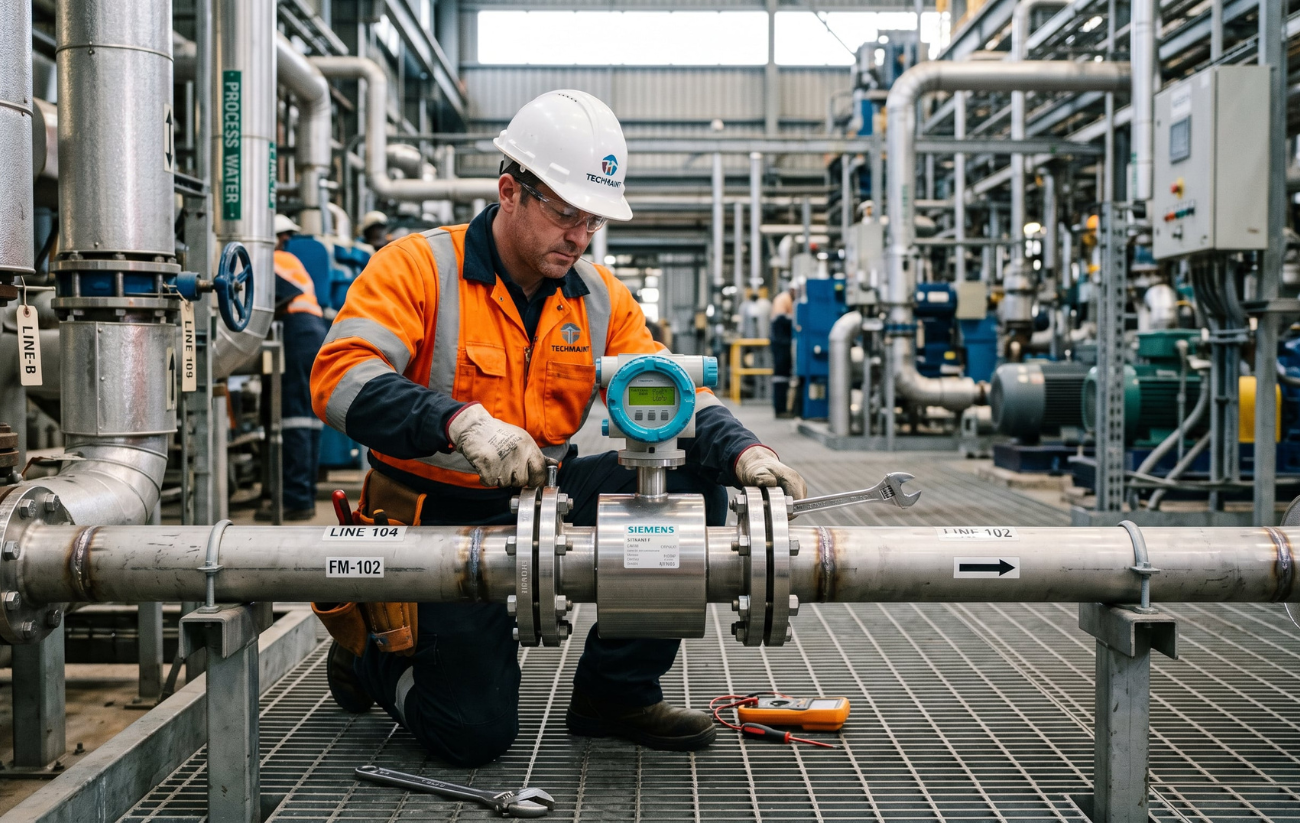
How to Install a Flowmeter Correctly – Complete Industrial Guide
Proper installation of an industrial flowmeter is just as important as choosing the right one. Even the most advanced flowmeter will provide incorrect readings if installed improperly.
Incorrect installation directly leads to:
- inaccurate measurements
- unstable readings
- product losses
- premature equipment wear
In this guide, you will clearly understand how to install a flowmeter correctly, regardless of type (electromagnetic, vortex, ultrasonic, Coriolis).
What to check before installation
Before installation, analyze:
- fluid type (liquid, gas, steam)
- pipe diameter
- pressure and temperature
- flow direction
- environmental conditions (vibration, humidity)
👉 Ignoring these factors leads to major errors.
Main rule: straight pipe lengths
For most flowmeters, it is mandatory to have:
- 5–10 pipe diameters upstream
- 3–5 pipe diameters downstream
👉 Example:
DN100 pipe → you need:
- 500–1000 mm upstream
- 300–500 mm downstream
Why this is important
- stabilizes the flow
- reduces turbulence
- increases measurement accuracy
Correct positioning in the pipeline
✔️ For liquids
- the pipe must be completely full
- avoid areas where air bubbles can form
- recommended position: horizontal or vertical (upward flow)
👉 Avoid:
- installation at the top of the pipe
- locations where air accumulates
✔️ For gases
- avoid areas where condensate accumulates
- install on dry sections
- recommended position: horizontal
✔️ For steam
- install after condensate separators
- ensure proper drainage
- avoid water accumulation
Flow direction
👉 Very important:
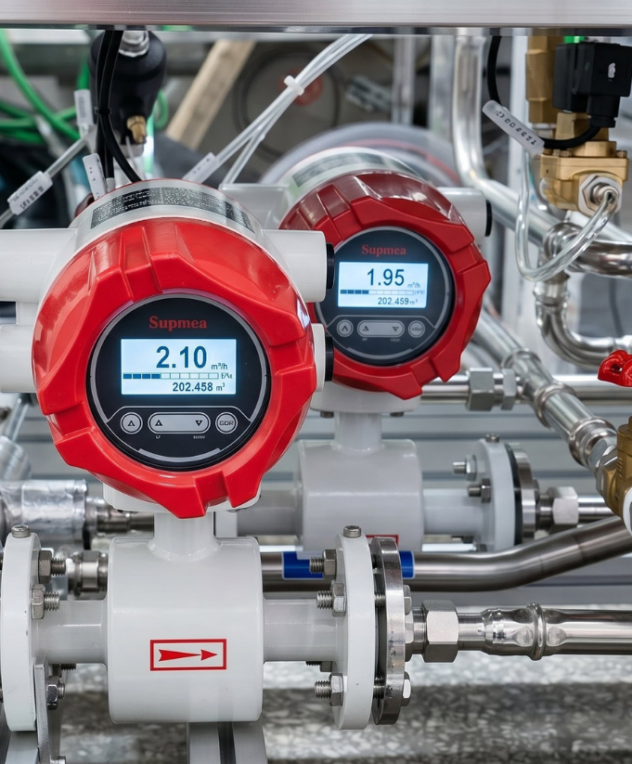
All flowmeters have a flow direction arrow.
✔️ Always install in the correct flow direction.
Avoid installation near disturbances
Do not install the flowmeter close to:
- elbows
- pumps
- valves
- reducers
👉 These create turbulence → inaccurate measurements.
Installation specifics by flowmeter type
Electromagnetic flowmeter
- requires a full pipe
- does not work with air
- electrodes must be correctly positioned
Vortex flowmeter
- requires stable flow
- sensitive to vibration
- avoid installation on unstable pipelines
Ultrasonic flowmeter (clamp-on)
- external installation on the pipe
- requires proper calibration
- depends on pipe material
Coriolis flowmeter
- can be installed in any position
- avoid mechanical stress
- requires solid mounting
Common installation mistakes
- lack of straight pipe sections
- installation in partially filled pipes
- mounting near elbows or disturbances
- ignoring flow direction
- incorrect positioning on the pipe
👉 Result:
- measurement errors
- unstable readings
- premature failure
Practical examples
✔️ Water in a horizontal pipeline
→ install on the side, pipe fully filled
✔️ Vertical pipe
→ upward flow = ideal
✔️ Existing system (no modifications)
→ ultrasonic flowmeter
Quick installation checklist
✔️ correct flow direction
✔️ pipe fully filled
✔️ straight lengths respected
✔️ no vibrations
✔️ no air or condensate
✔️ proper positioning
Conclusion – proper installation makes the difference
A correctly installed flowmeter ensures:
- accurate measurements
- stable operation
- long service life
- reduced costs
👉 There is no “bad” flowmeter — only incorrect installation.