Which Flowmeter Should You Choose for Your Industry? Complete Guide
Choosing an industrial flowmeter is one of the most important decisions in an automation system. A poorly selected flowmeter directly leads to:
- inaccurate measurements
- product losses
- higher energy consumption
- problems in the technological process
In this guide, you will clearly understand how to choose the right flowmeter based on your industrial application.
We will analyze the most commonly used types of industrial flowmeters:
- electromagnetic flowmeter
- vortex flowmeter
- ultrasonic flowmeter
- Coriolis flowmeter
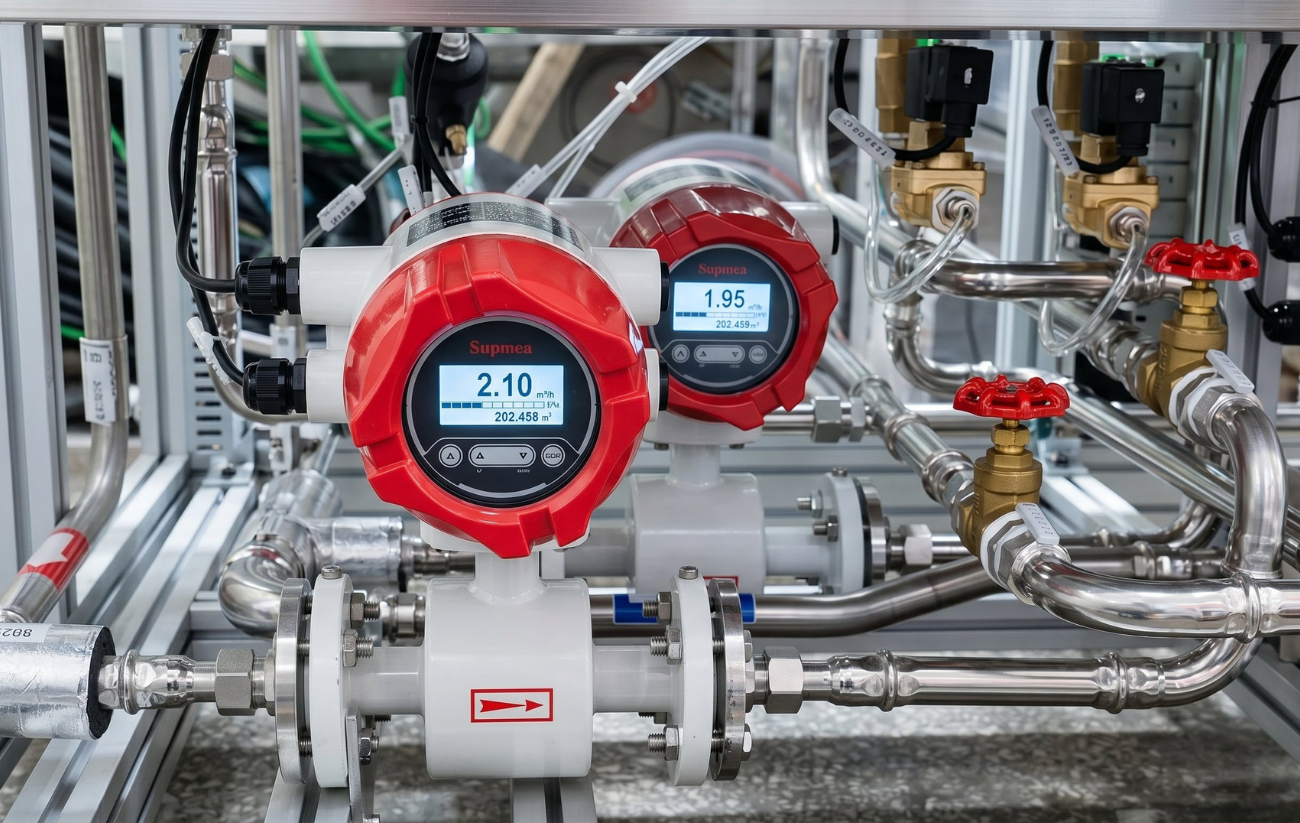
Electromagnetic Flowmeter – the optimal solution for water and conductive liquids
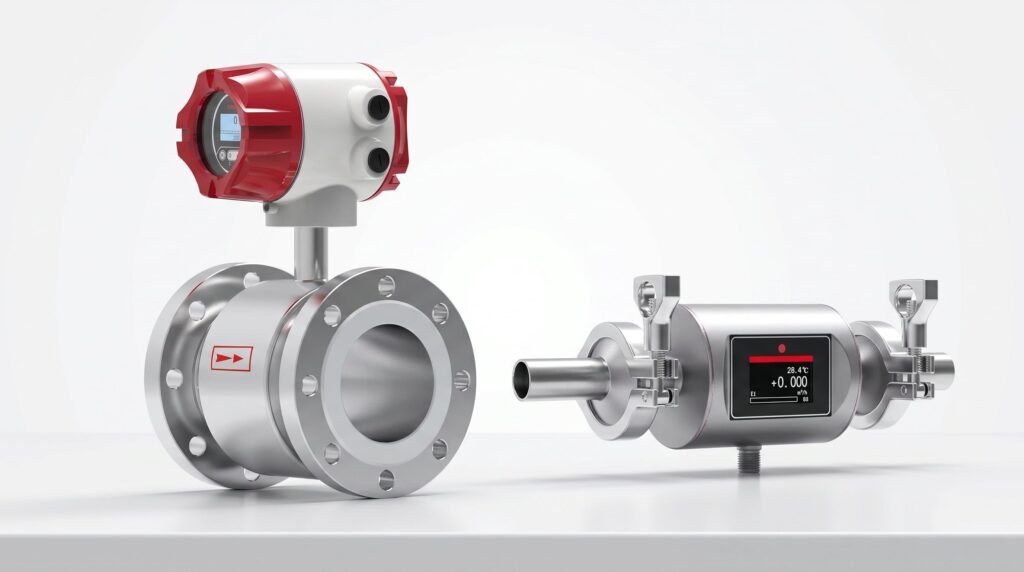
The electromagnetic flowmeter is the most widely used type for measuring conductive liquids.
How it works
It operates based on the principle of electromagnetic induction, measuring the velocity of a conductive fluid.
Where it is used
- potable water
- wastewater
- food industry
- agriculture and irrigation
Advantages
- high accuracy
- no moving parts
- minimal maintenance
- long service life
Limitations
- does not work with oil or fuel
- requires a conductive liquid
If your application involves water, this is the best choice.
Vortex Flowmeter – the right choice for steam and industrial gases
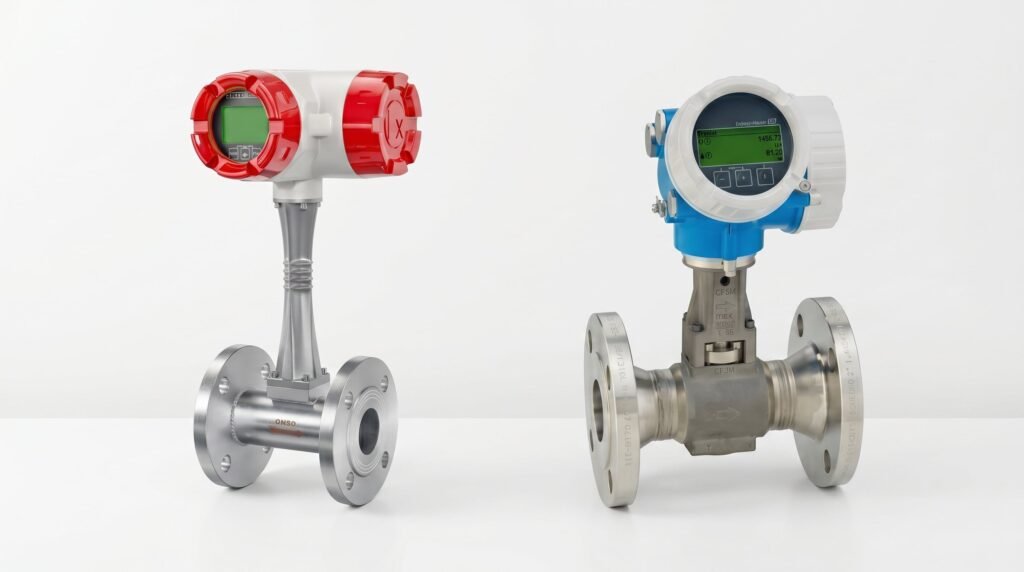
The vortex flowmeter is mainly used in applications with high temperature and pressure.
How it works
It measures the frequency of vortices generated by the fluid as it flows past an obstruction.
Where it is used
- steam measurement
- industrial gases
- chemical processes
Advantages
- resistance to high temperatures
- stability in industrial conditions
- high reliability
Limitations
- sensitive to vibrations
- requires stable flow
For steam measurement, it is the standard solution.
Ultrasonic Flowmeter – a modern solution without pipe intervention
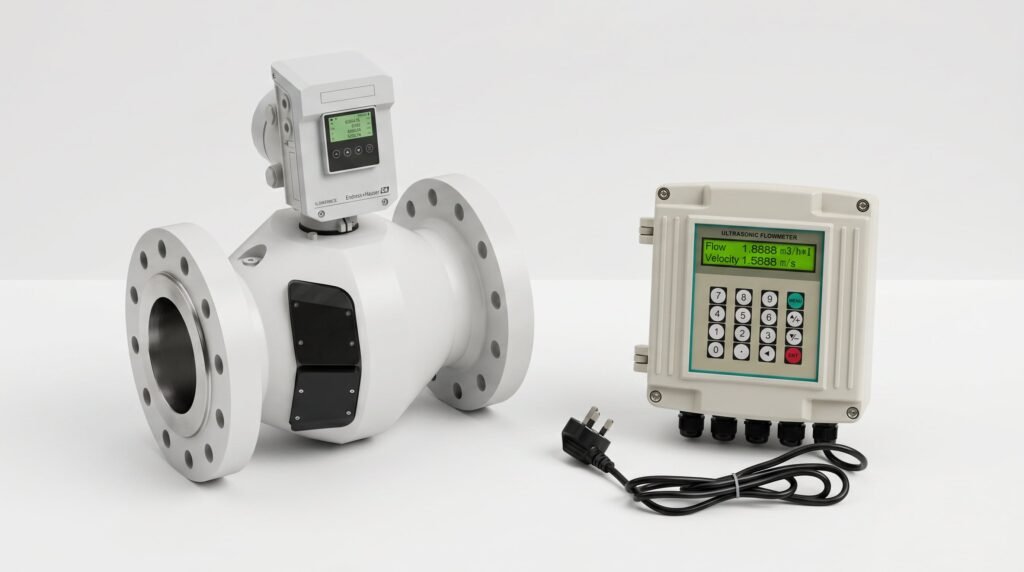
The ultrasonic flowmeter is ideal when you do not want to modify the existing installation.
How it works
It uses ultrasonic waves to determine the velocity of the fluid.
Where it is used
- energy audits
- temporary measurements
- already installed systems
Advantages
- quick installation without cutting the pipe
- portability
- high flexibility
Limitations
- lower accuracy than electromagnetic flowmeters
- affected by impurities
It is the ideal choice for quick measurements without stopping the process.
Coriolis Flowmeter – maximum precision for critical applications
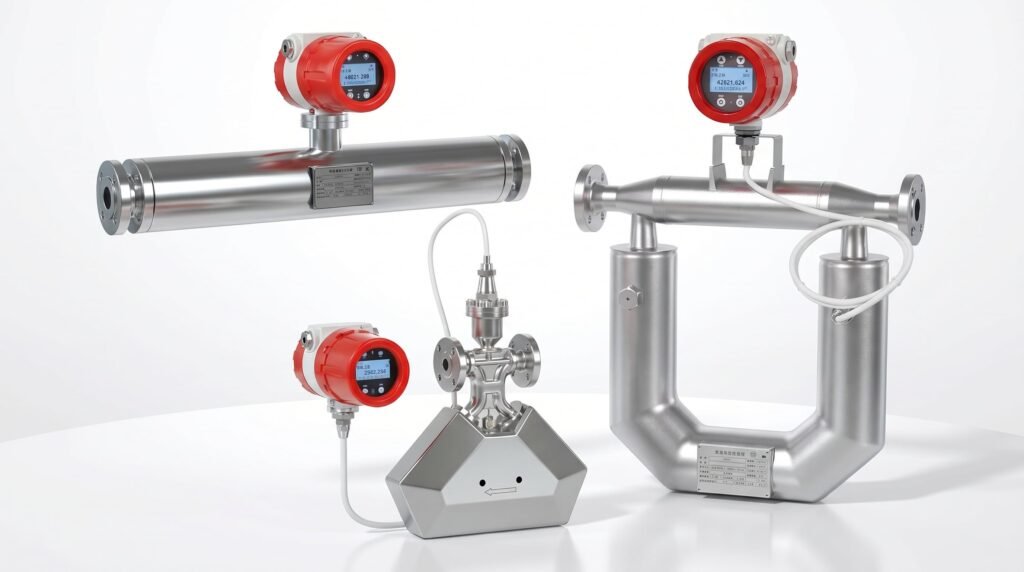
The Coriolis flowmeter is the most accurate type of industrial flowmeter available.
How it works
It directly measures mass flow using the Coriolis effect.
Where it is used
- chemical industry
- oil and gas
- dosing processes
Advantages
- extremely high accuracy
- direct mass measurement
- independence from external properties
Limitations
- high cost
- more complex installation
It is used where every percentage of error matters.
How to Choose the Right Flowmeter – Practical Guide
To choose the correct industrial flowmeter, answer a few simple questions:
1. What type of fluid are you measuring
- water → electromagnetic flowmeter
- steam → vortex flowmeter
- fuel → Coriolis or turbine flowmeter
2. What level of accuracy do you need
- standard applications → electromagnetic
- critical applications → Coriolis
3. Can you modify the installation
- yes → any inline type
- no → ultrasonic flowmeter
Common Mistakes in Flowmeter Selection
- choosing an electromagnetic flowmeter for oil
- using an ultrasonic flowmeter in critical applications
- installing a vortex flowmeter on vibrating pipelines
These mistakes lead to direct costs and operational issues.
Conclusion – Which Flowmeter Is the Best
There is no single “best industrial flowmeter.”
There is only:
- the right flowmeter for your application
- or a wrong choice that costs you money
Recommendations:
- for water → electromagnetic
- for steam → vortex
- for flexibility → ultrasonic
- for maximum accuracy → Coriolis
Flowmeter Selection Consulting
If you are not sure which industrial flowmeter to choose, it is recommended to properly analyze the application before purchase.
A correct choice ensures:
- accurate measurements
- optimized costs
- reliable, trouble-free operation